


What standard insurance covers
Every legally-rented scooter and motorbike in Thailand ships with Por Ror Bor insurance (Thai พ.ร.บ., the Compulsory Motor Insurance Act). It is third-party bodily-injury cover only - designed to put a baseline medical payment in the hands of anyone you might injure in a crash, regardless of who was at fault. As of 2026 the statutory preliminary limit is typically around 30,000 THB per injured person without any fault finding, rising to roughly 80,000 THB for treatment costs and up to around 300,000 THB for permanent disability or death if you are found at fault - figures set by the Thai Office of Insurance Commission and revised periodically, so verify at rental time. Por Ror Bor is cheap, mandatory, and by design the absolute minimum: it exists to stop injured third parties from being abandoned on the roadside, not to protect you.
What it doesn't cover
Por Ror Bor does not cover the four things tourists most often ask about. It does not cover damage to the rental bike itself - if you drop the bike on a wet corner on Karon Hill or clip a kerb in Chiang Mai's old city, the repair bill lands on you. It does not cover theft - a common fear on Phangan and Samui where unattended bikes go missing overnight; see our deposit-protection explainer on how deposit handling ties into theft exposure. It does not cover your own medical bills - the rider's hospital costs sit with the rider's own travel insurance or wallet. And it does not cover pillion passenger injuries beyond the statutory third-party limits. Those four gaps are the exact anxieties that keep renters awake the night before handover. Closing them is the job of the optional add-ons covered below.
The table below summarises how each of those four gaps is handled by basic Por Ror Bor cover versus an optional Comprehensive Damage Waiver.
| Coverage | Basic | CDW |
|---|---|---|
| Third-party liability | Covered | Covered |
| Bike damage | Not covered | Covered |
| Theft | Not covered | Covered |
| Your medical | Not covered* | Not covered* |
* Standard motorbike insurance does not cover your medical bills. Use a travel insurance policy for personal medical coverage.
Comprehensive Damage Waiver (CDW)
A Comprehensive Damage Waiver is the optional top-up that closes the bike-damage and theft gaps. A CDW is not insurance in the legal sense - it is a contractual waiver where the shop agrees, in exchange for a daily premium, not to chase you for damage or theft losses above an agreed excess (also called a deductible). Excess is the amount you remain on the hook for; the waiver kicks in for anything above that. Typical CDW excess on a Thai rental scooter currently runs around 3,000-10,000 THB depending on the bike's replacement cost and the shop's risk appetite - the Honda Click 160 sits at the low end, a Honda CB500X or Kawasaki Versys 650 sits at the high end; figures vary by shop. A worked example: with a 5,000 THB excess on a written-off scooter, you pay the first 5,000 THB and the CDW absorbs the rest. CDW reduces your exposure dramatically - it does not eliminate it, which is why the excess figure is the number to compare between shops rather than the daily CDW price.
Travel insurance and bike rentals
Most international travel insurance policies exclude motorcycle and scooter use by default. The blanket exclusion reads something like "any loss arising from the insured person operating a motorised two-wheeled vehicle" and it voids the medical, repatriation, and liability cover on your policy if you ride without a specific endorsement. Many insurers offer a motorcycle add-on, typically for a modest premium, that restores cover - but almost every one of those add-ons requires that you hold a valid licence for the class of bike in the country of the incident. In practice that means a motorcycle endorsement on your home licence plus a valid 1949 Geneva Convention IDP for Thailand. Read your policy before you fly and confirm two clauses in writing: the motorcycle-endorsement clause and the licence-validity clause. The cost of getting this wrong is a five- or six-figure medical bill that neither Por Ror Bor nor your travel insurance will pay.
Why an IDP is required for insurance validity
The void-coverage chain is strict: no International Driving Permit at the moment of a crash means the rider is legally unlicensed in Thailand, which means the Por Ror Bor third-party cover on the bike is void, which means any CDW the shop sold you is void (CDWs universally require the rider be legally licensed), which means your travel insurance is void (since almost every motorcycle endorsement requires local-jurisdiction licence validity). That is four layers of protection stripped away by one missing document. Police do not need to be at the scene for this chain to trigger - if a hospital or insurer requests your licence after a crash and you cannot produce an IDP, every cover collapses at once. Treat an IDP as the keystone of your insurance, not a formality. Read our full IDP guide for Thailand motorbike rentals for the class-A requirement, the country-by-country issuance steps, and how Thai Bike verifies your permit before handover.
Related safety guides
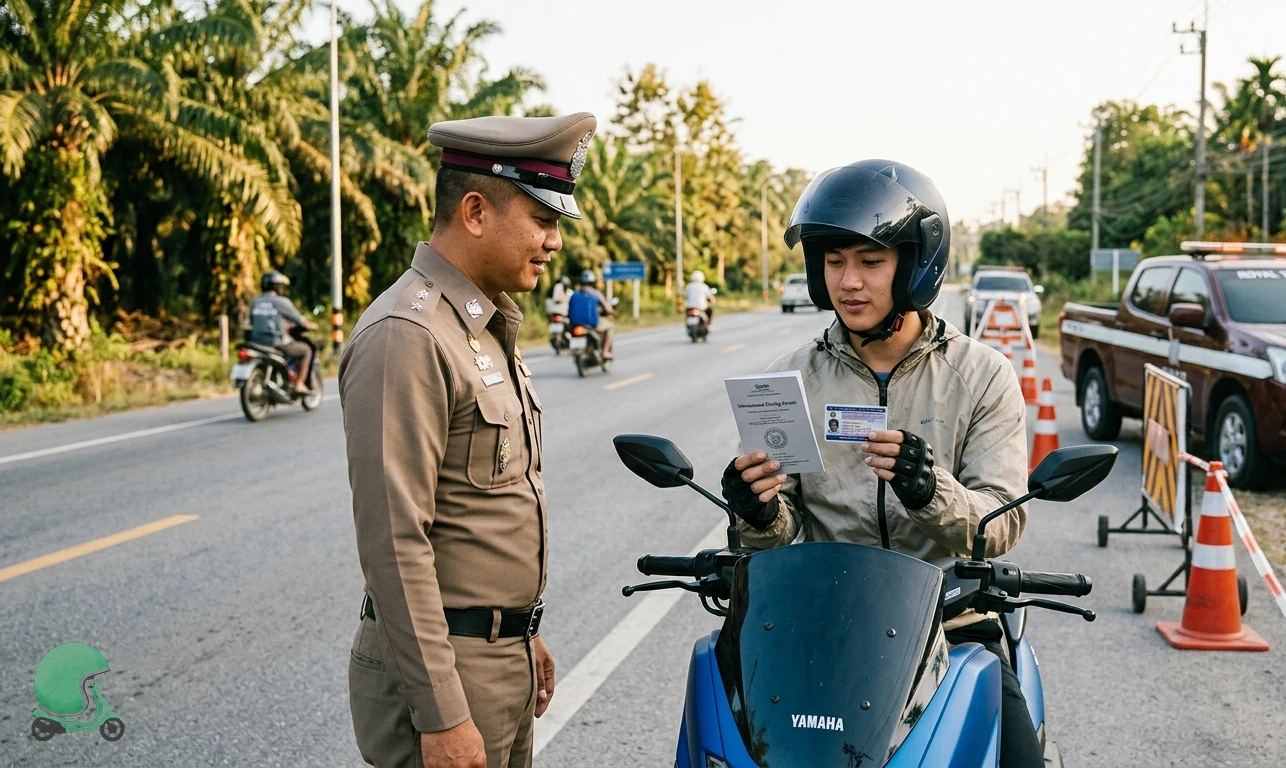
Class A IDP requirements for Thailand
Class A IDP requirements, how to get one before you fly, and how Thai Bike verifies every permit.
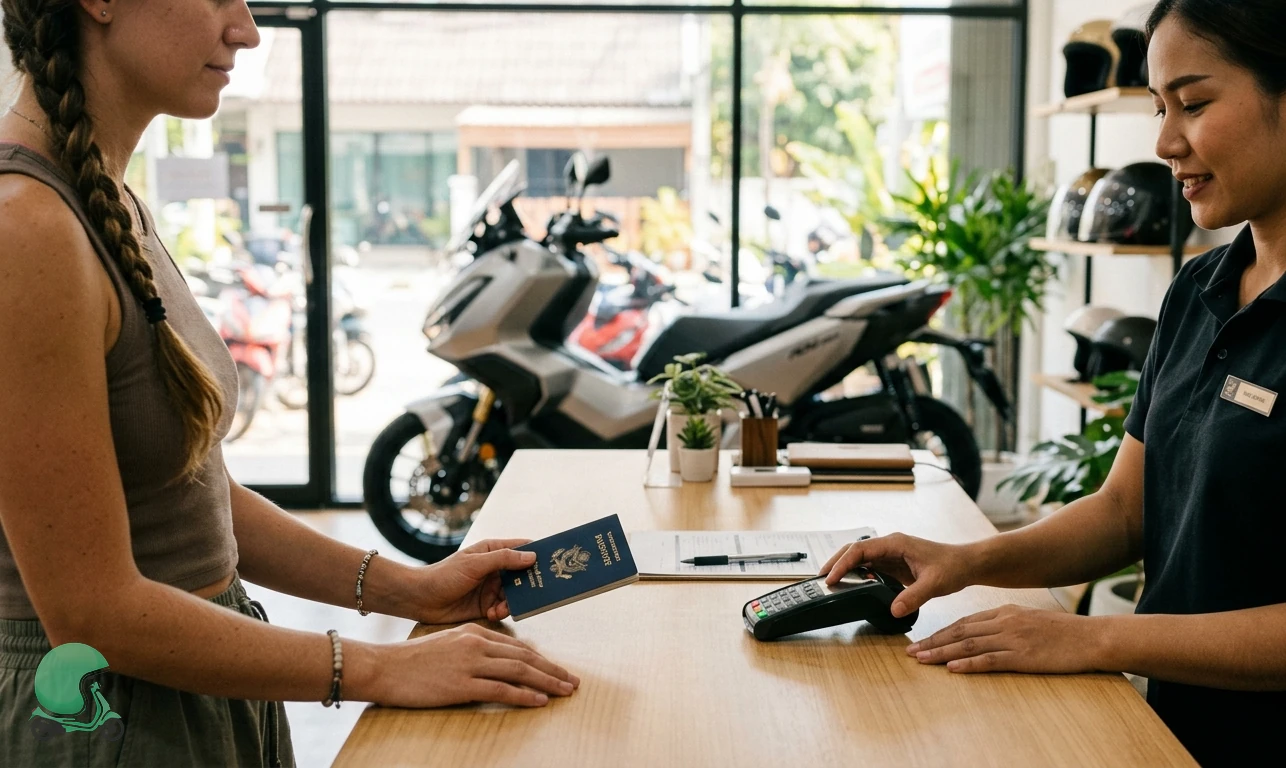
Deposit protection and the passport trap
The passport-deposit trap explained plus the cash and card-hold deposit ranges you should expect.
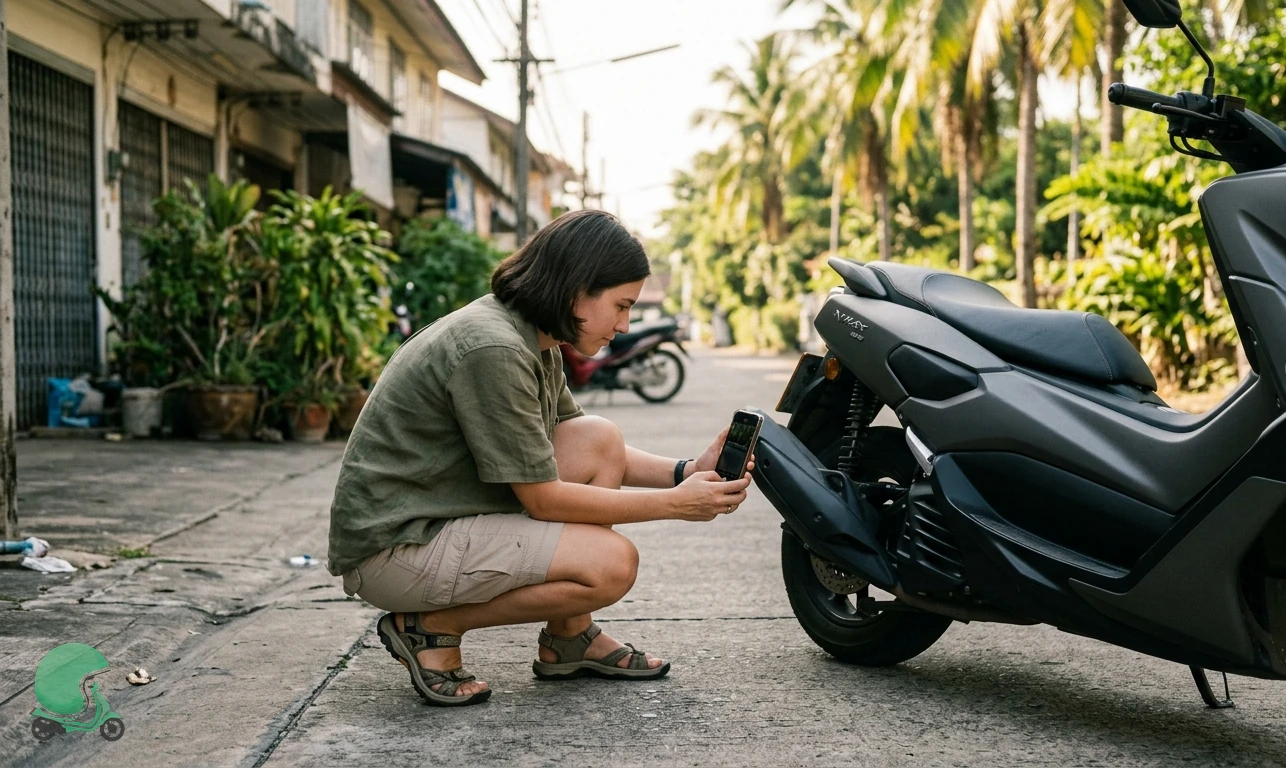
Rental damage documentation walk-around
The six-step in-app inspection flow that closes the hidden-damage scam loop at every rental.