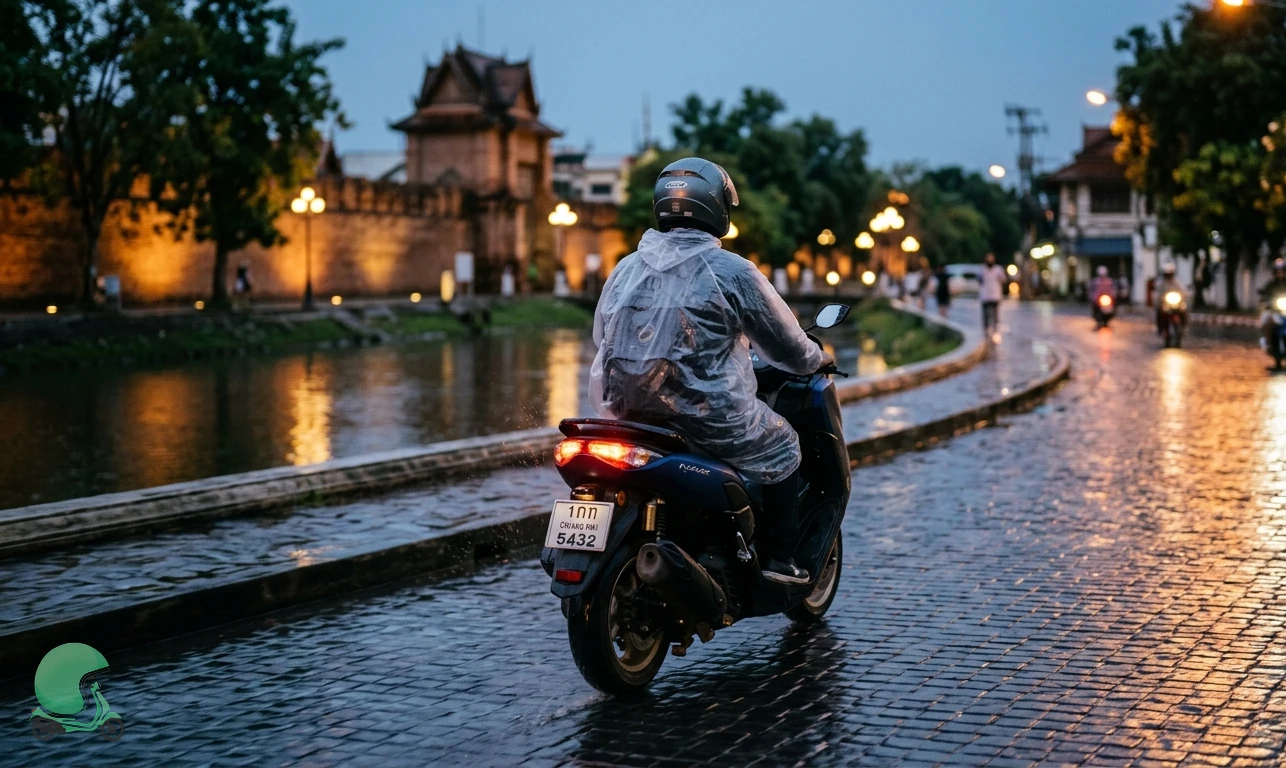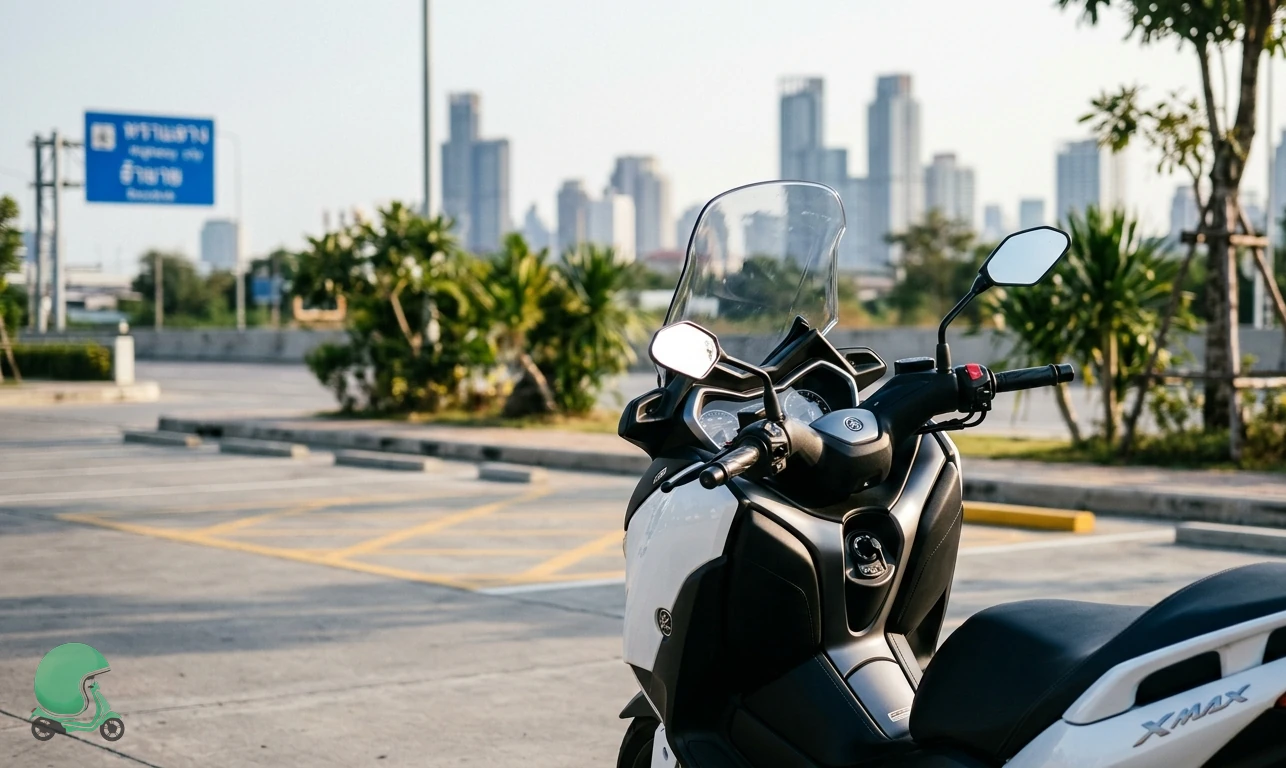

If you're reading this before your first Thai rental, start here. If you've done one day already and felt overwhelmed, this is the debrief. I've ridden these rules across Bangkok daily since 2023 on my PCX 160, plus rented runs through Patong-Kata-Rawai, Pattaya's Beach Road, Chiang Mai's Old City moat loop, Samui's ring road, and Phangan's polished-concrete hills - five rules carry across every one. Whether you're in Bangkok scooter rental, Phuket scooter rental, or Chiang Mai scooter rental. How Thai Bike rentals work covers the logistics.
Drive on the Left - Everything Flows From This
Thailand drives on the left. Coming from a right-hand-drive country, this is the single biggest Day-1 mental shift, and every rule below flows from it. Practical consequences: your slower default lane is the left; passing happens on the right; at every intersection I look right FIRST when pulling out, because oncoming traffic comes from my right. Turning from a side road into a main road, I sweep across to the LEFT lane. For my first 20 minutes in any new city I deliberately exaggerate the right-look. By Day 2, automatic.
Roundabouts: Give Way to the Right
Thailand's roundabout rule is counter-intuitive for visitors used to "give way to traffic IN the roundabout": here, the rule is give way to vehicles approaching from your right. Worked example: I approach Victory Monument from the north, traffic flows counter-clockwise, a car is already on the roundabout to my right - I yield, wait for a gap, enter. Same rule at each corner of the Chiang Mai moat - look right, yield right, then go. Same rule everywhere I've ridden in Thailand: the right-yield instinct rewires by Day 3.
Lane Splitting and the Scooter Lane
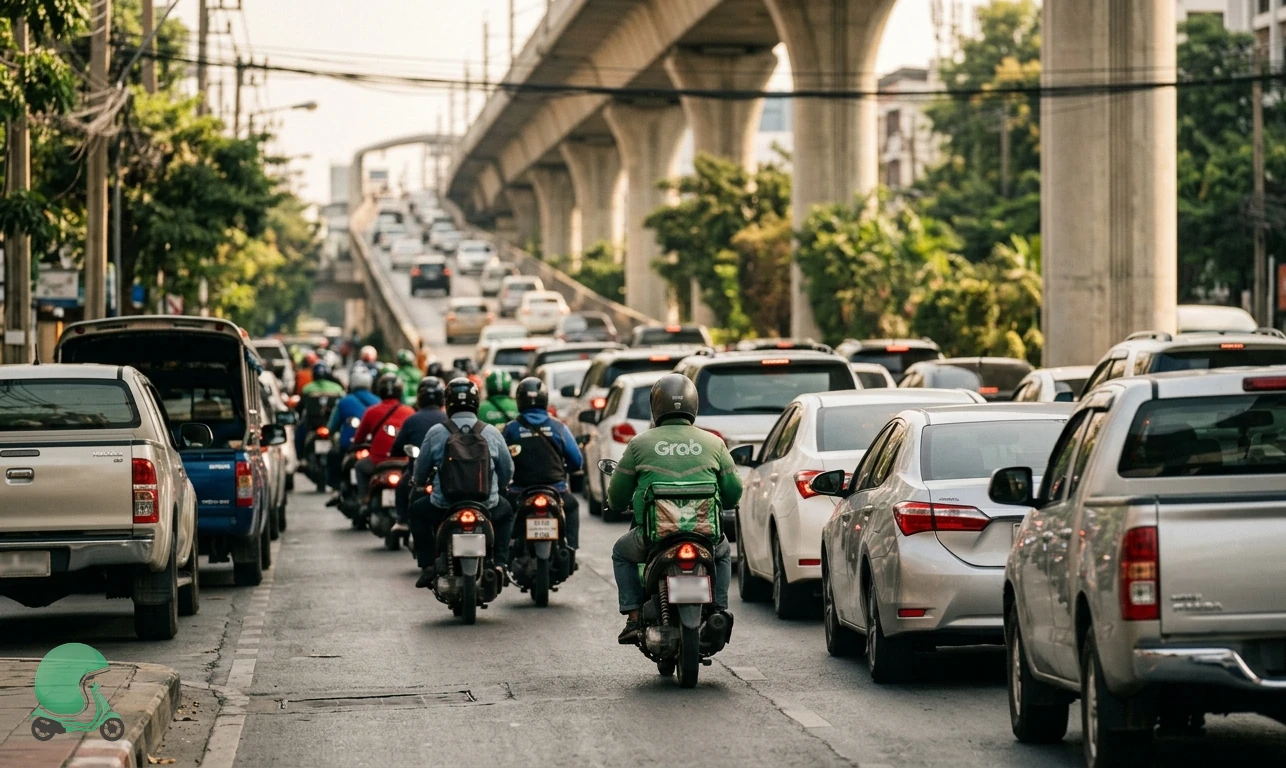
Lane-splitting between rows of cars at slow speeds is not just legal in Thailand, it's expected. At every red light I file down the left edge and cluster at the stop line ahead of the cars; drivers expect it and edge right slightly. The informal "scooter lane" is the left shoulder - ride there for your first week. Filter slowly, don't race delivery riders, never split at speeds where you couldn't brake for an opening car door. The 2020 Phetchaburi door-opening incident I witnessed - 7 stitches - was exactly that scenario.
Hand Signals Thai Riders Actually Use
Three hand signals do most of the work on Bangkok arterials:
- Turning. Right arm extended, pointed in the direction. Mostly when indicators are unreliable. I use it rarely.
- Slowing. Right arm extended down at 45°, palm back. Signals the rider behind you. Useful on narrow sois where brake lights don't get seen fast enough.
- Thank-you wave. Left hand off the bar, lifted in acknowledgement, after another rider or driver lets you through. Using it is how I blend in; not using it is how you're marked as a tourist.
Police Checkpoints: What to Expect and How to Pass Cleanly
Checkpoints are the most-feared part of foreign rentals and almost always the least eventful. I've been pulled over at 14 Bangkok checkpoints since 2018 - Sukhumvit Superhighway, the Pattaya ring road, the Patong-Kata corridor, Chiang Mai's Huay Kaew. The officer wants my International Driving Permit guide for Thailand, passport (phone photo fine), rental agreement, helmet. Interaction 30-60 seconds. Without an IDP, expect a 500-1,000 THB fine with a real receipt - not a bribe opportunity. Never offer money directly. I keep IDP plus copies on my phone and open with "sawadee krub/ka."
Reading the Flow: What Tourists Miss
Three unwritten rules I've picked up since 2018:
- The horn is courtesy, not anger. A short tap means "I'm here, I'm passing." I use it on blind curves on Phangan and Doi Suthep climbs.
- Left turns are defensive. When a car turns left and you're on the left shoulder, the car wins by right of use - even if you legally have priority. Hang back.
- Right of way is negotiated. Thai traffic flows by micro-negotiations. Don't assert priority if nobody's planning to give it.
Insurance and the worst case
If something happens - the Rama IV 5-7 pm gridlock has been my own ABS-test moment more than once - the insurance situation isn't what most Western renters assume. Compulsory coverage handles injury to others, not your medical costs or the bike. Understand rental insurance coverage in Thailand before your first ride, not after. A scratch is easy to handle; an unclear policy is not. That's the guide - five rules, one checklist. Keep this page open on your phone for your first day; you'll only need it once.