
If "scooter rental" makes you nervous, this is the guide I wish I'd had on my own first rental in 2013 Hanoi. The fear is rational: in my 2019 VnExpress International series I documented 89 tourist scooter accidents across Hanoi's Old Quarter over 14 months, and 61% happened within the first two hours of rental. The seven steps below are what I teach nervous first-timers in scooter rental in Bangkok, on Koh Samui scooter rental, or via Phuket scooter rental - in the order they happen on day one.
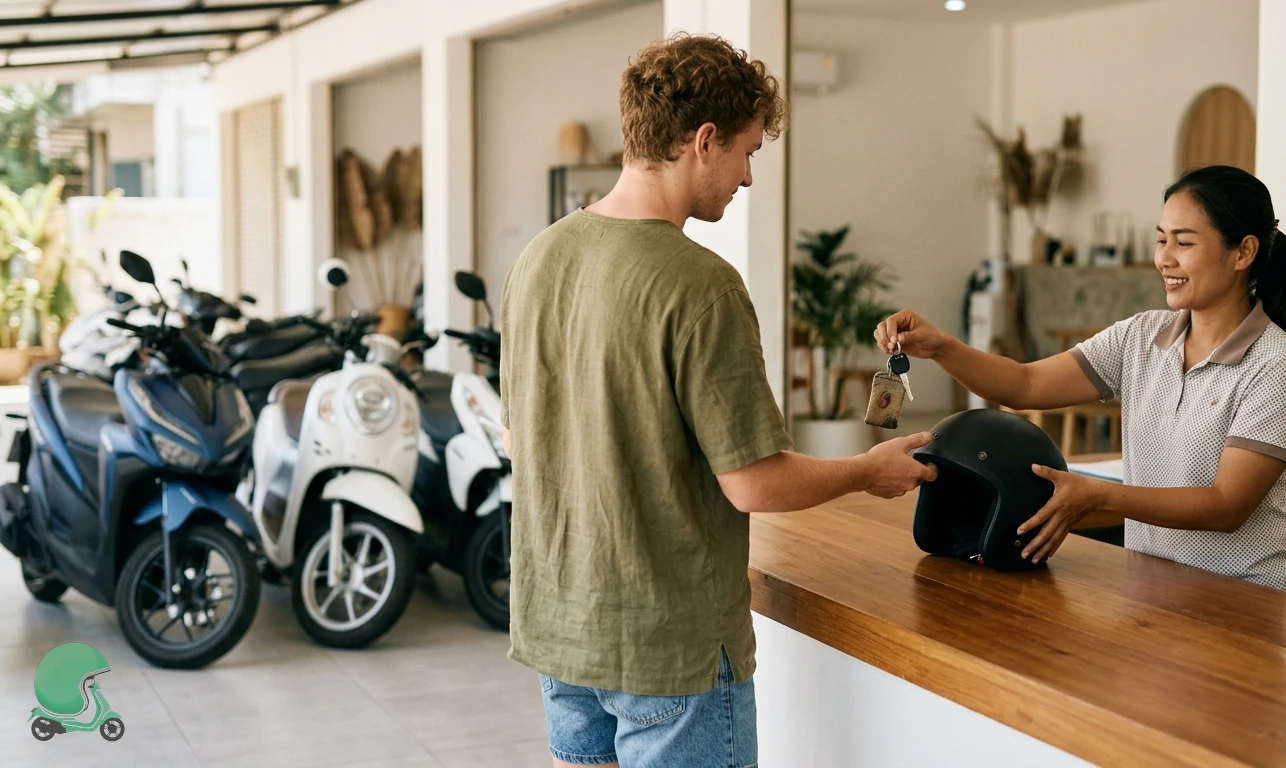
The hero photo is a typical moment: keys and helmet handed across a rental-shop counter. That hand-off takes about 30 seconds; the paperwork that precedes it is what this guide actually prepares you for, and the pre-ride loop you do after - the single biggest line between a calm Day 1 and an 89-accident statistic - is what closes it. I've used these seven steps on my own first morning in five different Thai cities since 2023.
Step 1 - What to expect at a Thai rental shop
The first 20 minutes go roughly like this: I arrive, the owner greets me, asks for my passport and licence, has me photograph the bike (Step 6), runs through the controls, takes payment plus deposit, and hands me the keys. Most of it is conversational, not formal. What changes the experience entirely is whether the shop is a verified platform partner or a random kerb-side stand - verified shops follow a standard playbook, random stands vary. Read how Thai Bike's verified-shop booking works before you choose.
Step 2 - Documents you need
Three documents I carry to every Thai rental:
- Your home-country driver's licence. Original, not a copy. Must include a motorcycle or automobile category.
- An International Driving Permit (IDP). I've been stopped at 14 Bangkok checkpoints since 2018; the IDP cost roughly ฿400 to issue and saves ฿500-1,000 every stop. The Thailand IDP rules for scooter rental guide covers which class.
- Your passport for the shop to photograph - never to retain. A scanned PDF on my phone is usually enough.
Step 3 - Choosing your first bike
For a first Thai scooter, two defaults:
- Honda Scoopy - 110 cc, 93 kg, 746 mm seat. Right under 160 cm or first throttle. About 150 THB/day. Rent the Honda Scoopy on Koh Samui - the island default.
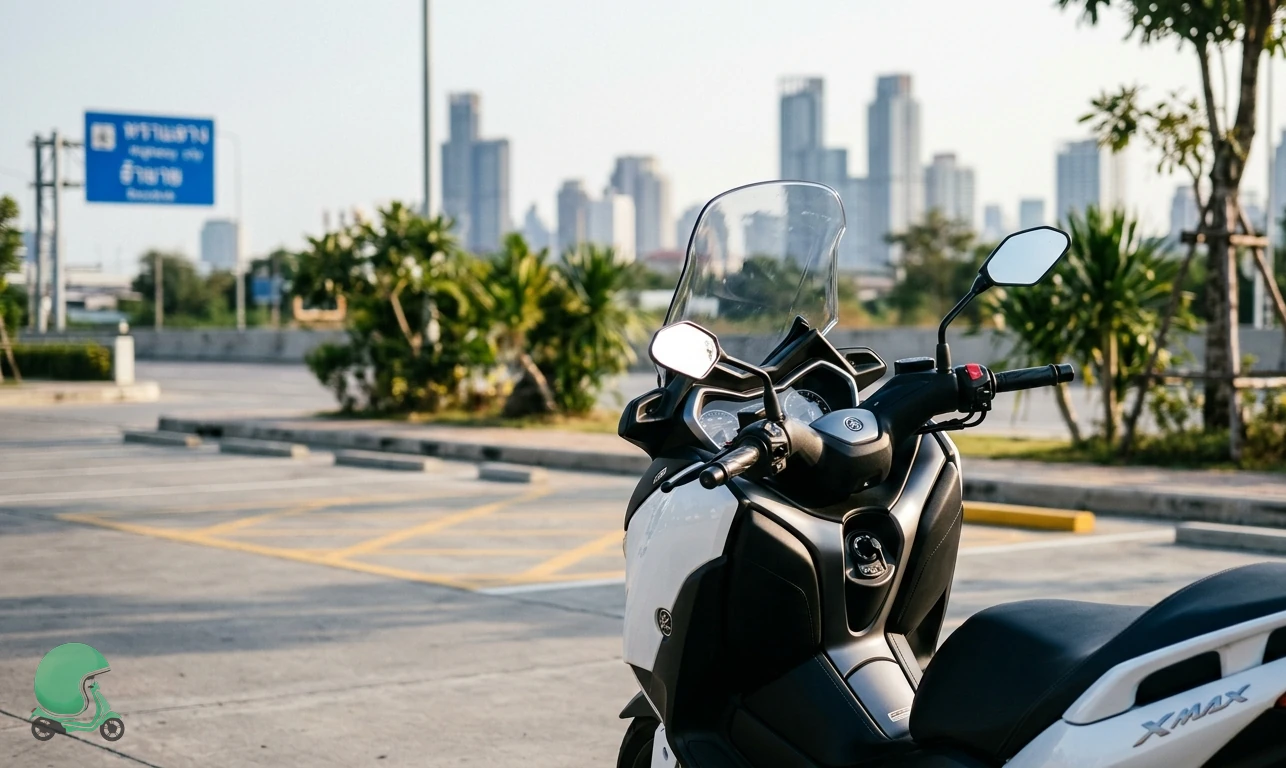
- Honda Click 160 - 160 cc, 118 kg, 780 mm seat, front ABS on 2022-plus. Right over 163 cm or for monsoon. Rent the Honda Click 160 in Bangkok - the city default.
Under 155 cm: Scoopy. Over 163 cm or monsoon: Click 160.
Step 4 - Safety basics for Thailand's traffic
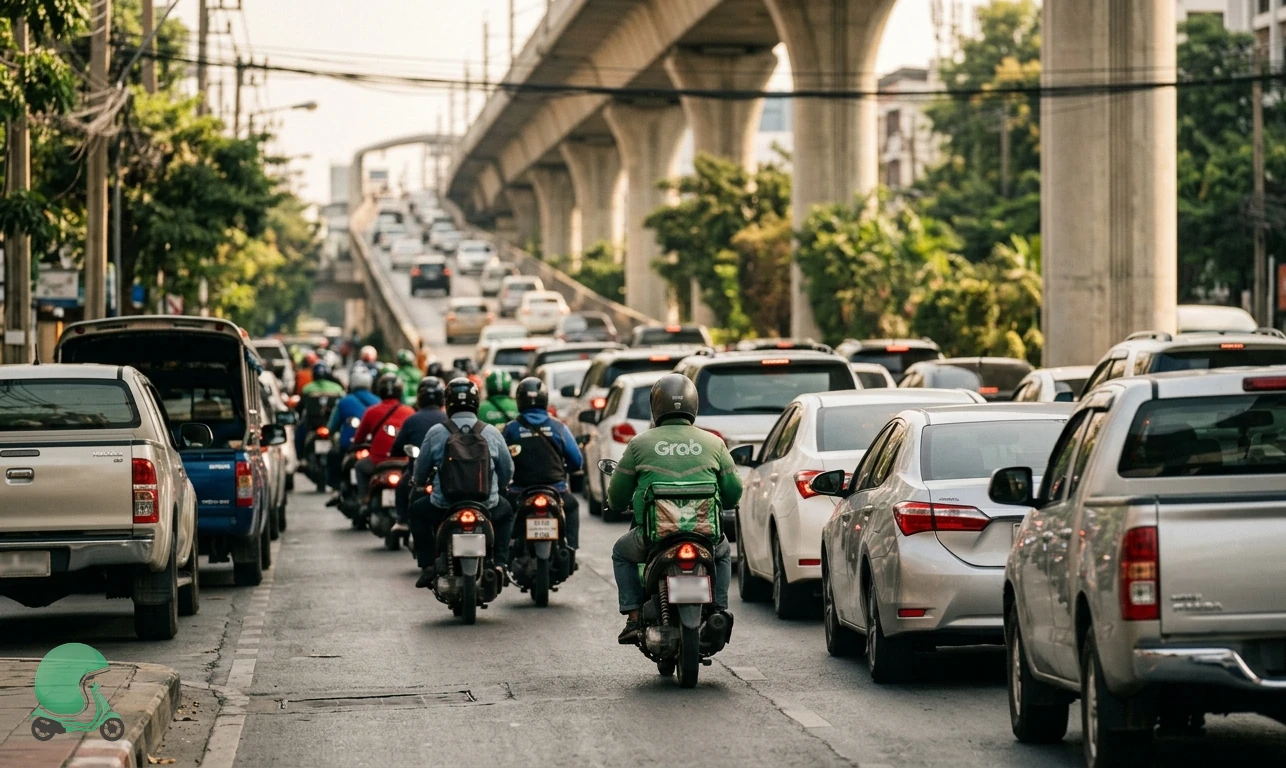
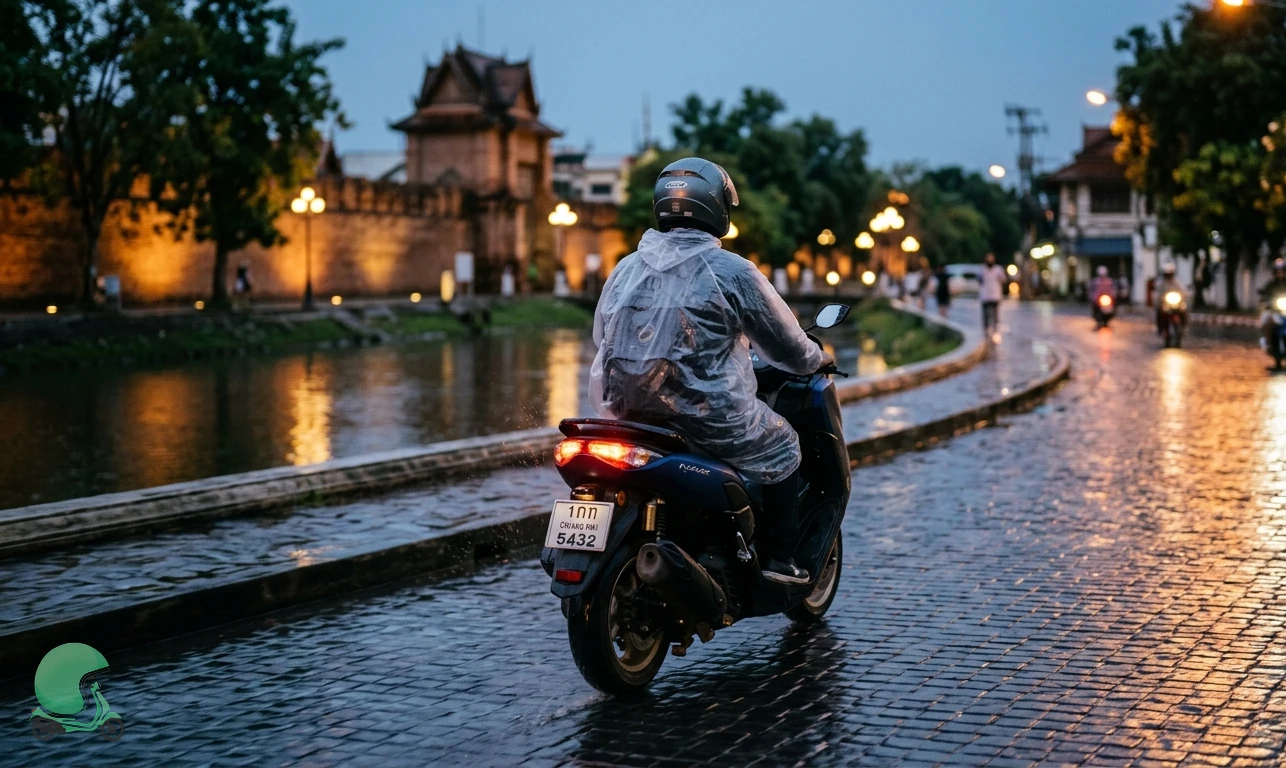
Thailand drives on the left. Coming from right-hand-drive countries, the rewiring is total: when I pull out, look right; when I cross a road, look right; at an intersection, the opposite lane is on the right. Other essentials - scooters are permitted to filter forward at red lights, but ride conservatively until you watch how locals do it. Wear the helmet. Signal lane changes even when nobody else does. On narrow sois, dogs, tuk-tuks, and delivery riders come from anywhere.
Step 5 - Payment, deposit, and insurance
Expect a security deposit of 2,000-5,000 THB cash for small scooters, occasionally a passport photocopy as alternative. Never leave the original passport - a legitimate shop won't ask. Insurance isn't what most Western travellers assume: the compulsory Por Ror Bor covers injury to others only, not your medical bills, not the bike. Most shops offer CDW at 100-200 THB/day that limits your liability in a crash. Read what insurance actually covers on a rental scooter in Thailand and the deposit protection for scooter rentals guide before signing.
Step 6 - Pre-ride documentation
This is the single most important habit, and the one my 2019 VnExpress series taught me to anchor everything else on - of the 127 Hanoi shops I surveyed, only 18% provided any pre-ride briefing. Before I pay, before I accept the keys, I photograph every existing mark: both sides, front, back, seat, under-seat storage, fuel gauge, odometer. I email them to myself for the timestamp. The inline photo is what this looks like in practice. Read the pre-rental damage documentation guide for the exact list.
Step 7 - Returning the bike
At drop-off I fill the tank to the level I received it, ride back, walk around the bike with the owner, compare my Step-6 photos to the current condition. If there's a new scratch I caused, I own it - most shops accept 200-500 THB for a minor scratch. If the new scratch isn't mine, the Step-6 photos protect me. Deposit usually comes back in cash on the spot. I've done this five times in Thailand since 2023 with zero deposit disputes.
A reassurance, in closing
If you've never ridden a scooter anywhere, this is genuinely fine. The Scoopy at 93 kg is designed for it. I tell every first-timer the same thing I told myself in 2013 Hanoi: ride your first ten minutes around the block near the shop before heading into traffic, keep your speed under 40 km/h for the first day, and you'll be comfortable by day two. The worst that happens is you arrive somewhere slower than a taxi. The best is the next week of trips changes shape entirely.