Experiences
A Week on the Honda Click 160 in Bangkok
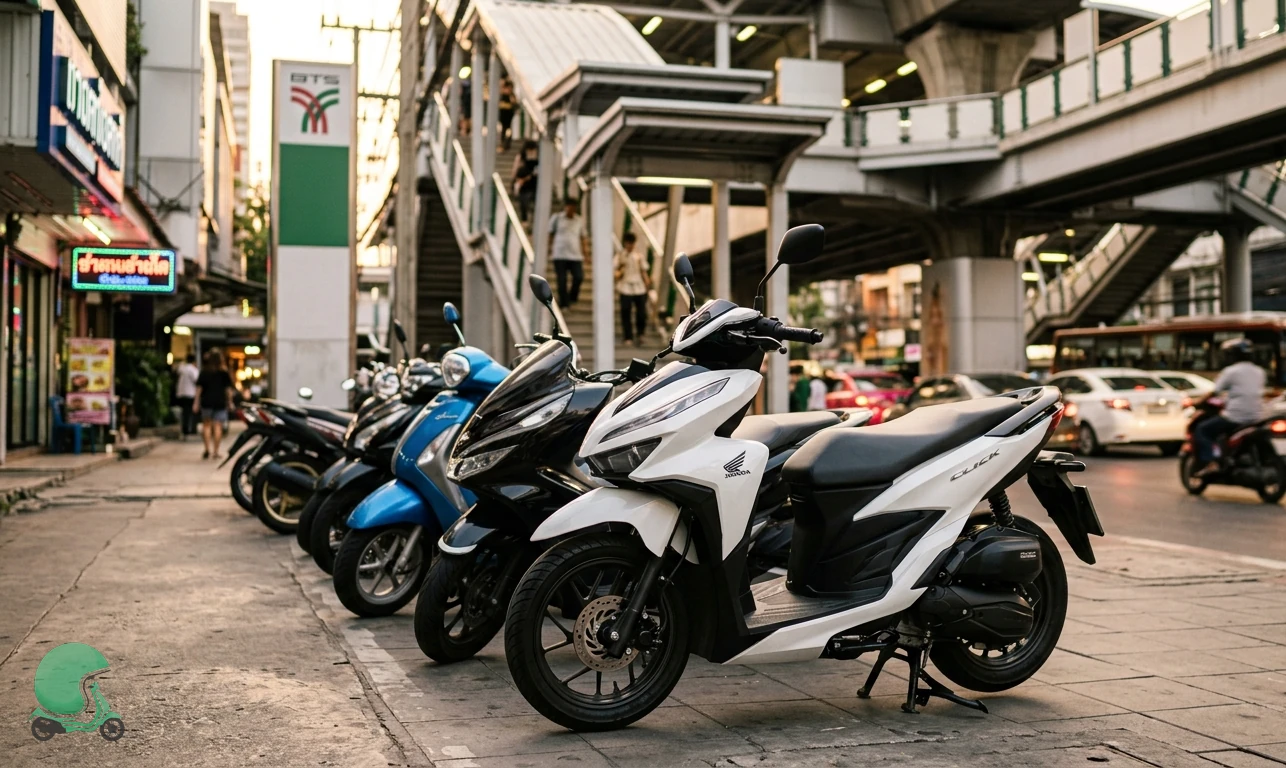
A day-by-day week on a rented Honda Click 160 in Bangkok - Sukhumvit rush hour, Chatuchak traffic, a monsoon downpour, and honest scooter costs against Grab.
6 min read
25+ verified shops. Scooters from ~200 THB/day.

| Duration | Price |
|---|---|
| 1 day | ฿200-300 |
| 1 week | ฿1,200-1,800 |
| 1 month | ฿4,200-6,300 |
All prices in Thai Baht. Final price varies by mileage, vehicle age, and modifications. Third-party insurance and helmet included.
The Honda Click 160 is the default first scooter for anyone new to riding in Thailand - the one every shop hands to beginners, and the reason you see more of them than any other model parked outside 7-Elevens. At 200 to 300 THB per day it replaces a 500 to 1,500 THB daily Grab habit, which is why first-time visitors swap from taxis to scooters within 48 hours of arriving in the country.
What makes the Click work for a never-ridden beginner is how forgiving every contact point is. A fully automatic CVT removes clutch and gears so you cannot stall. The 780 mm seat lets most riders plant both feet flat at red lights, which is the single most reassuring moment on your first day. The 118 kg wet weight means you can push it out of a narrow parking slot or a sandy driveway without asking anyone for help.
Front ABS on the 2022-plus generation stops the front wheel locking on wet monsoon tarmac - the hazard that ends most beginner crashes. Eighteen litres of under-seat storage takes a day pack plus a rain jacket without any squeezing. A 5.5 litre tank clears 200 km between fills, so a day-trip rider rarely thinks about fuel stops. It is the bike you rent before you know what to rent - the safe default that buys you time to learn.
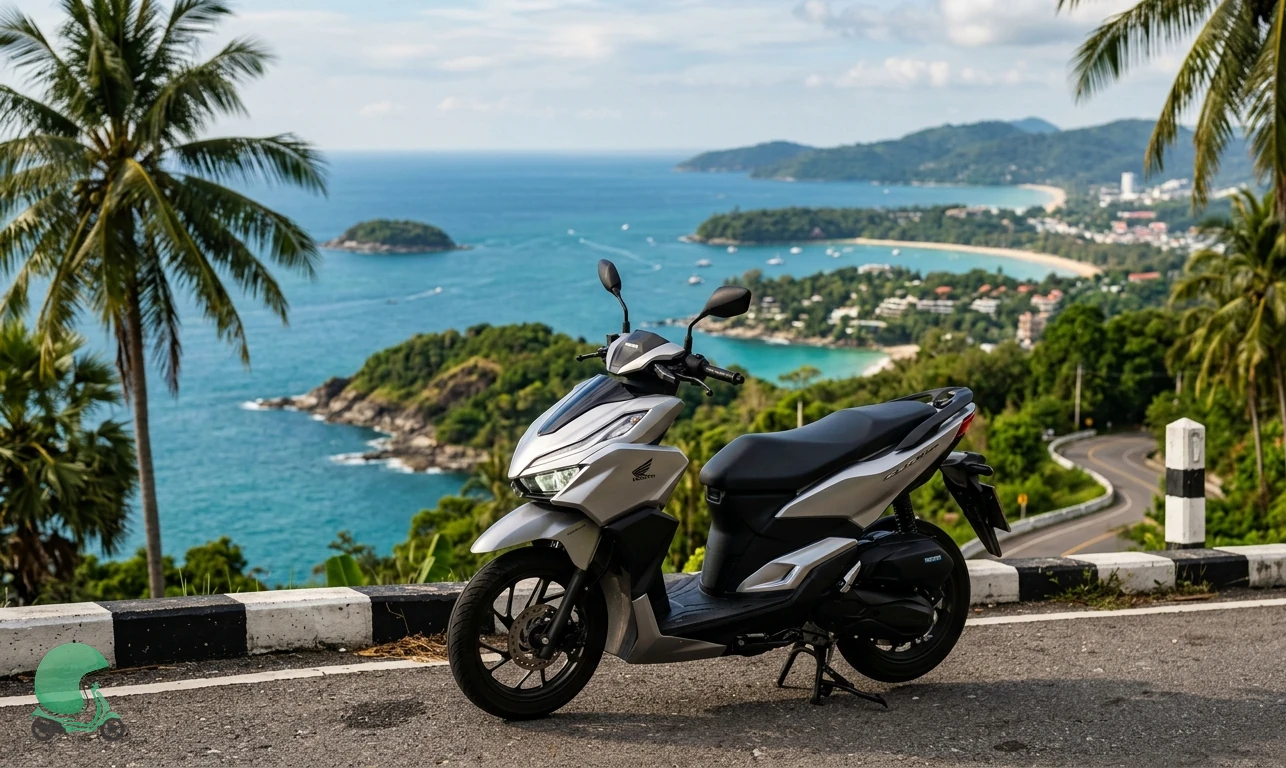
Phuket rewards a nimble scooter because nothing on the island is close together. The Click 160 handles the 20 km run from Patong to Kata without complaint, and the 118 kg weight makes the tight U-turns at Kata viewpoint car park feel manageable instead of tense. A 5.5 litre tank covers three or four days of beach-hopping before you need a PTT stop.
Front ABS earns its keep on the descent from Patong Hill when a monsoon squall hits and wet sand washes across the road surface. At 200 to 300 THB per day it replaces two Grab rides to Rawai and back, which is all it takes to justify the rental.
A DOT-style helmet in your size is handed over on delivery - no separate rental fee, no surprise charge.
Mandatory Thai third-party cover is bundled in the daily price, not sold as an add-on at the shop. See our insurance guide.
City-wide delivery to your hotel, condo, or accommodation - nothing to collect from the shop.
Delivery and return are photo-documented so you are never charged for scratches that were already there.
Open a support ticket any time - English-speaking humans respond fast for breakdowns, extensions, or police-stop questions.
A refundable card hold replaces the passport deposit - your ID stays with you the whole rental. Learn about deposit protection.
A day-by-day week on a rented Honda Click 160 in Bangkok - Sukhumvit rush hour, Chatuchak traffic, a monsoon downpour, and honest scooter costs against Grab.
6 min read
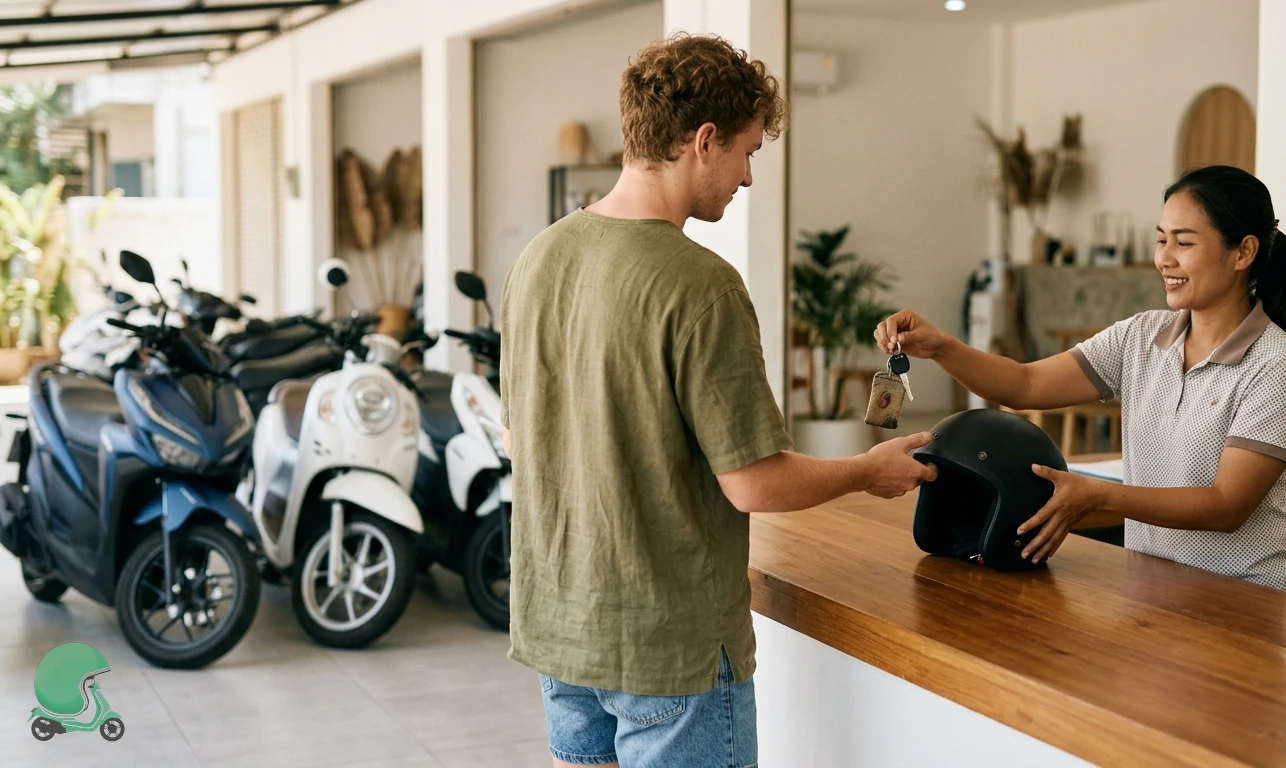
A first-timer's guide to renting a scooter in Thailand - what to expect at the shop, documents, choosing a bike, insurance, and the right way to ride home.
5 min read
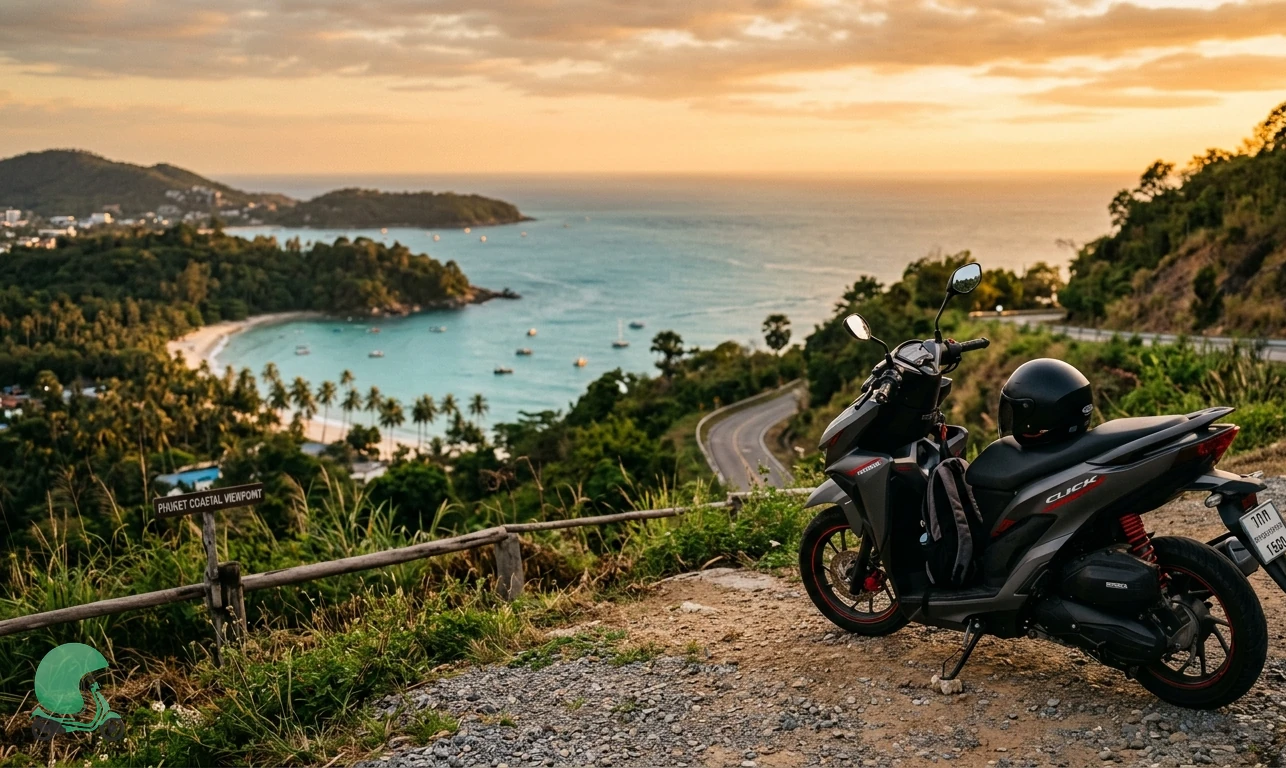
Tap the button to see live availability in Phuket on the Thai Bike app.
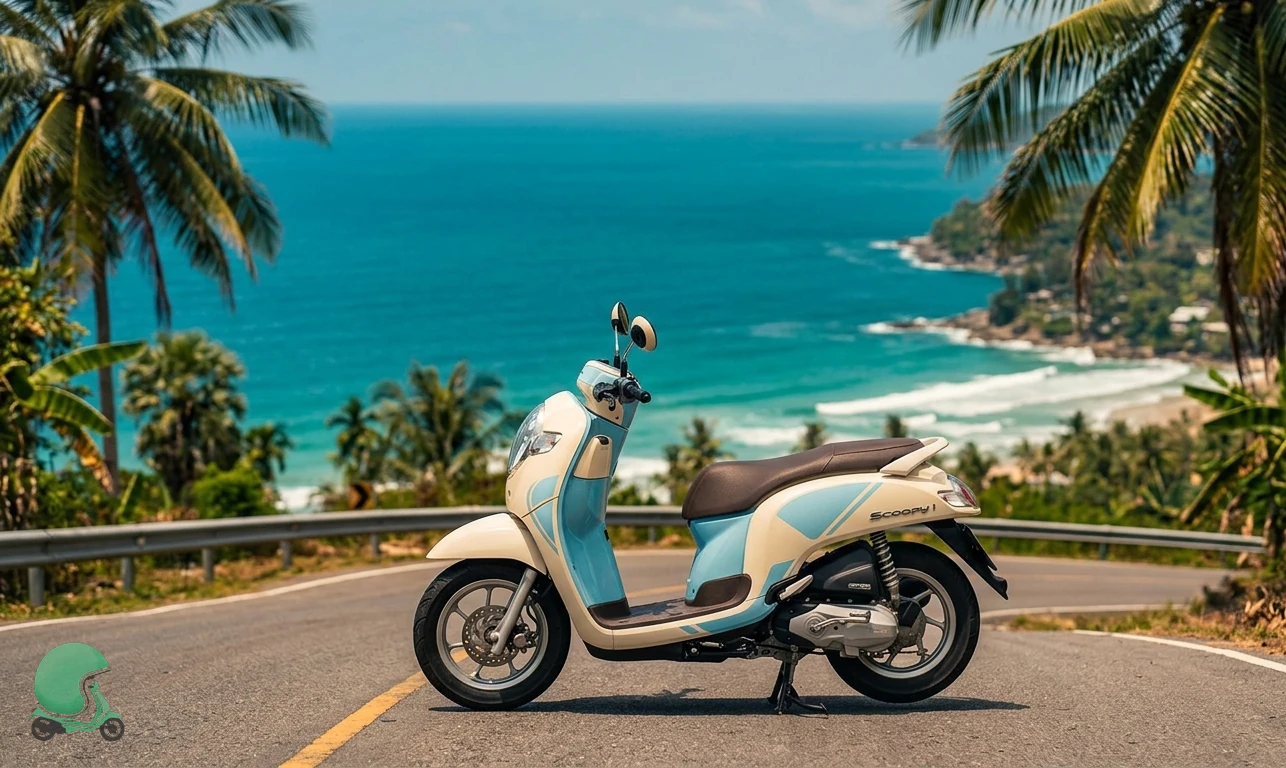
110cc · Automatic
The Honda Scoopy is the lightest, cheapest, lowest-to-the-ground scooter on the platform - the one to pick if you're 155 cm tall, if this is your first scooter anywhere, or if you just want a retro-looking runabout for island beach hops. At 93 kg it's easier to push out of a sandy hotel driveway than anything else in the lineup, the 746 mm seat gives flat feet to most riders, and the 110 cc single is docile enough that a nervous rider won't accidentally over-accelerate. CBS (not ABS) links the brakes to prevent the front from locking first, which covers the most common beginner mistake. Idling stop kills the engine at red lights so you never stall. At 150-200 THB per day it's also the lowest entry cost in Thailand - the default pick on Koh Samui and Koh Phangan.
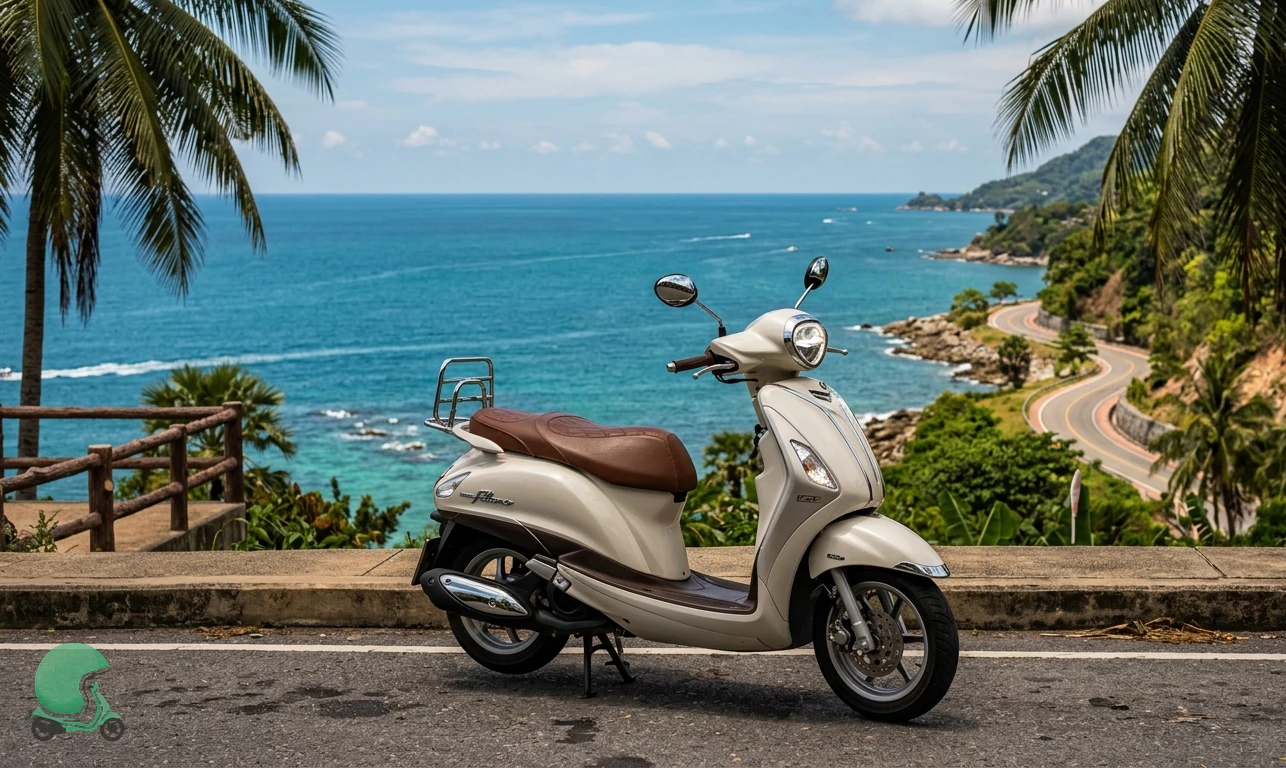
125cc · Automatic
The Yamaha Filano is the style pick in the scooter lineup - a modern-retro 125 that looks at home parked outside a Phuket beach cafe or a Koh Samui boutique. Past the styling, it's a practical daily: the 125 cc Blue Core engine has more pull than a Scoopy for mild coastal hills, the Smart Motor Generator makes starts almost silent (no more waking up the hotel), and stop-start kills idle at red lights. The wide flat seat handles two-up better than most 125s, and at 96 kg it's close to Scoopy-light for parking in sandy lots. Front ABS is standard on the Connected trim Thai Bike stocks, and UBS links front and rear for balanced stops. 150-250 THB per day puts it above a Scoopy and well below an NMAX, which matches its role: better-looking commuter, not more-powerful one.
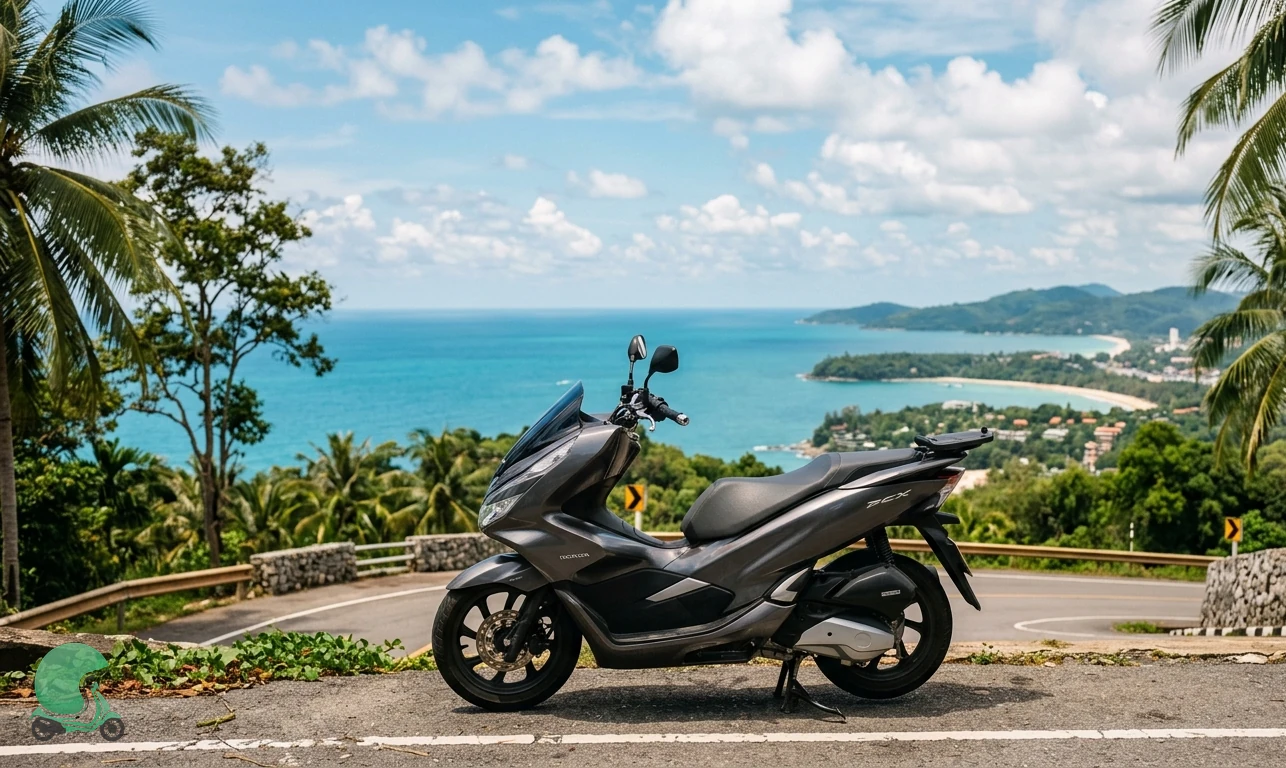
160cc · Automatic
The Honda PCX 160 is the step up from the Click - a premium-feel commuter scooter that keeps the 200-tier price ceiling. The wider seat, flat floor, and 30-litre under-seat box make it the natural pick for couples and riders who carry more than a day bag (a full-face helmet plus rain jacket fits). Front and rear ABS and Honda's Selectable Torque Control give you a real margin on wet Bangkok expressway ramps or a sudden Phuket downpour. An 8.1-litre tank pushes range past 300 km, the small windscreen cuts 100 km/h wind, and the 764 mm seat stays accessible for shorter riders. At 250-400 THB per day it costs a little more than a Click but earns it on longer days and two-up trips.
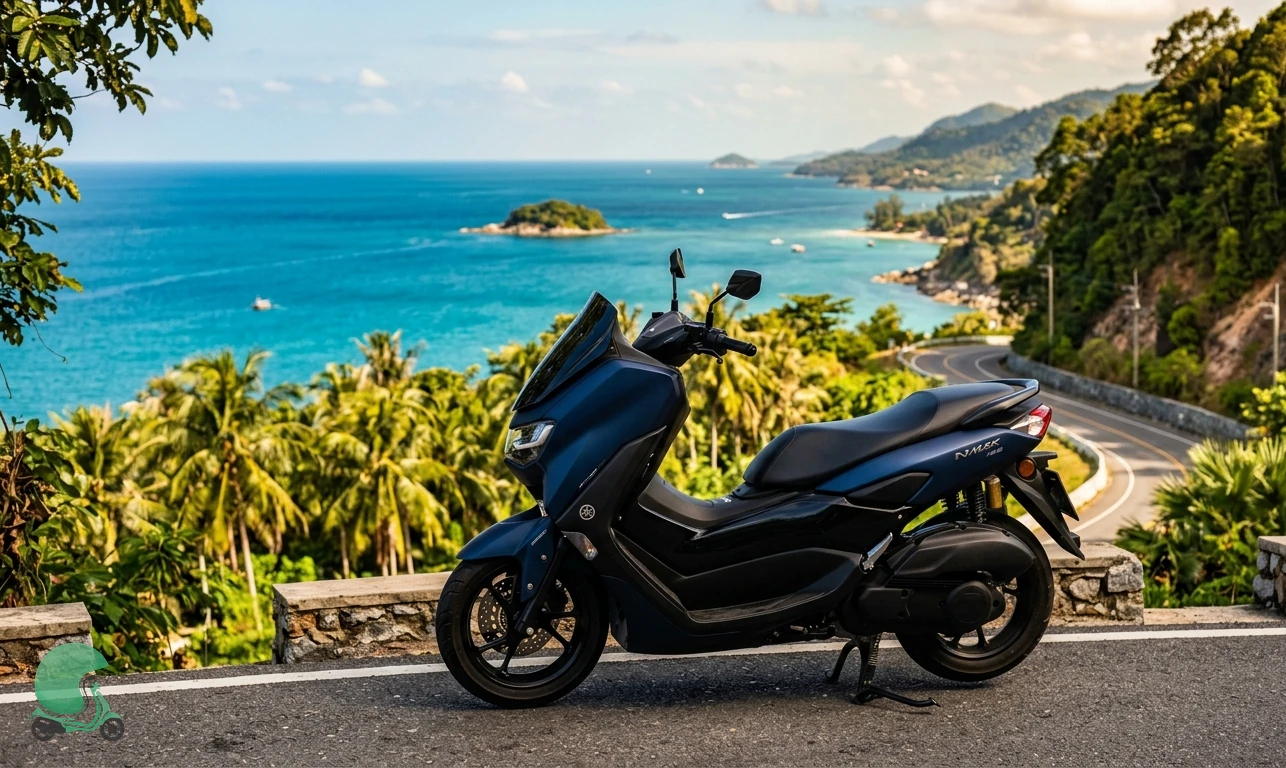
155cc · Automatic
The Yamaha NMAX 155 is the sport-scooter step up from the Click/PCX crowd - the scooter riders pick when they want something that feels like a motorcycle but rides like a twist-and-go. Yamaha's VVA (Variable Valve Actuation) delivers low-rev torque in traffic and extra top-end when you open it up on a coast road, so one engine covers the soi and the 100 km/h expressway without feeling thrashed. Dual ABS and traction control are real safety hardware - not marketing - and they matter most on wet Phuket hairpins. The 25-litre box swallows a full-face plus a day bag, the 7.1-litre tank stretches past 250 km, and the 765 mm seat still suits most riders. At 250-400 THB per day it's the enthusiast's daily: sportier than a PCX, lighter than an XMAX.
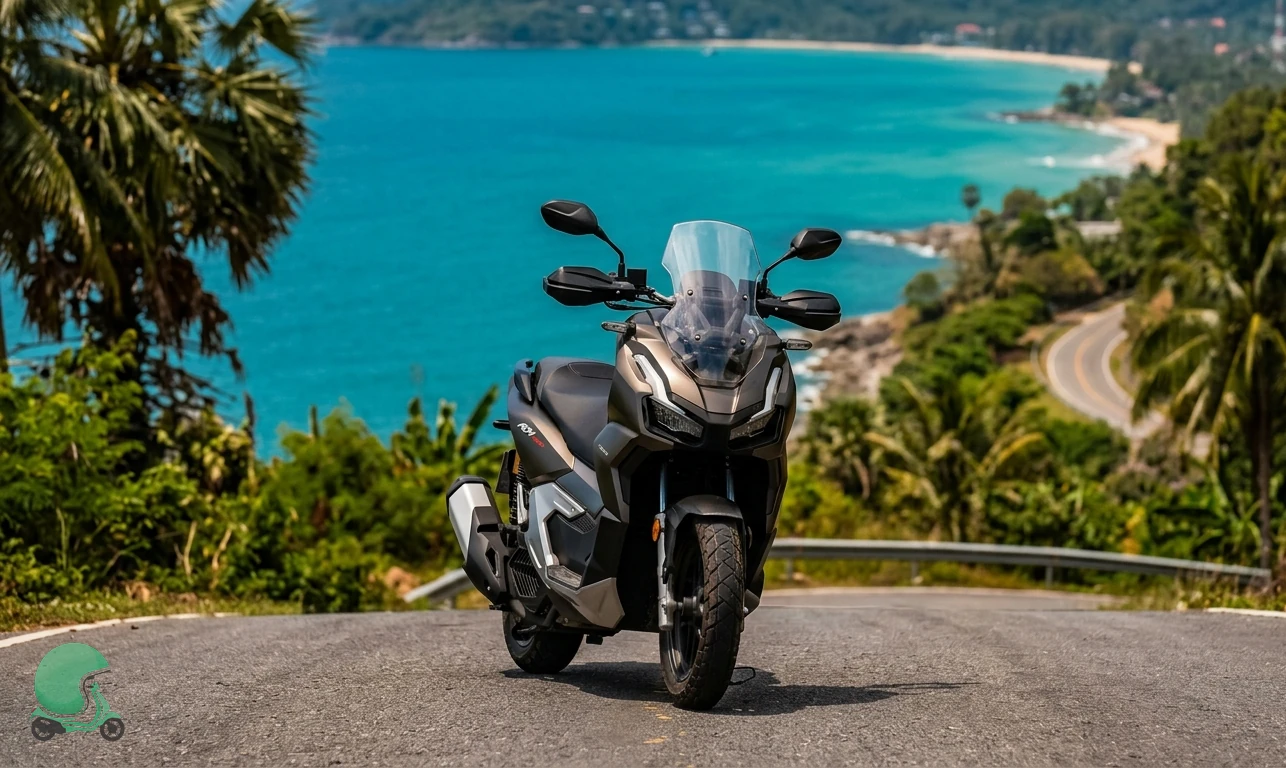
157cc · Automatic
The Honda ADV 160 is the scooter for riders who want to leave the main road without learning a clutch. 130 mm of front suspension travel and larger 14-inch front / 13-inch rear wheels handle the potholes, broken tarmac, and unsealed shortcuts you'll find on Chiang Mai's Samoeng loop, Phuket's back roads to Kata, or the interior tracks on Koh Samui. Honda kept the automatic CVT and 780 mm seat height of a normal city scooter, so there's no new skill to acquire - just more capability when the pavement ends. Front ABS, knuckle guards, and a tall windscreen add genuine all-weather composure. 30 litres under the seat takes a day pack and rain jacket; the 8.1-litre tank stretches past 300 km. At 300-500 THB per day it's priced between a Click and a real adventure bike - and bridges exactly that gap.
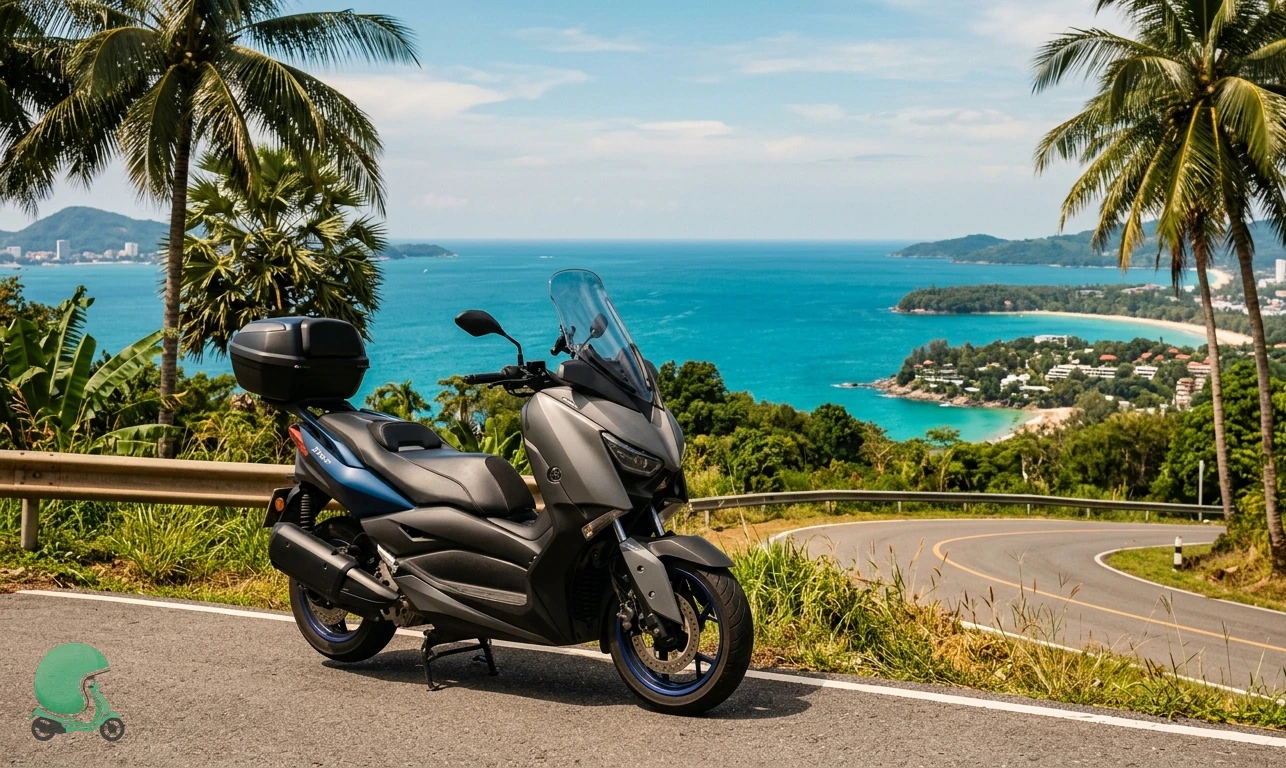
300cc · Automatic
The Yamaha XMAX 300 is where the scooter category crosses into motorcycle territory. The 300cc Blue Core engine pulls past 120 km/h with a passenger and luggage, the adjustable windscreen cuts highway wind on a 200 km inter-city run, and the 45-litre box swallows two full-face helmets or real weekend luggage. Dual ABS and traction control are not optional badges here - they are the reason experienced riders pick the XMAX over a 155cc when they're doing Bangkok-Pattaya, Phuket-Krabi, or Chiang Mai day loops. At 179 kg it's heavier than a Click, but the 795 mm seat stays manageable and there's still no clutch to learn. The 500-800 THB daily rate reflects the class - this is a maxi-scooter, priced between sport scooters and full-size bikes.